
We’re opening the doors this Friday and Saturday, May 1 and 2, from 11 am to 3 pm at 855 and 857 Pasteur Street. Stop by to tour two of the “6 Sisters” homes. We’ll have cold beverages and homemade cookies ready for you.
857 Pasteur, a 3-bedroom, 1-bath, two-story, offers approximately 1,384 square feet of living space and is currently for sale, features separate living and dining areas.
This home sits on an oversized end lot (approximately 44 feet wide by 147 feet deep), offering more outdoor space than is typical for the area — ideal for a garden, playing, or outdoor entertaining.
Exterior features include vinyl siding, metal roof, modest decorative trim, covered front and side porches, and on- and off-street parking.
Some original character remains inside, and the home is being sold as-is for owner-occupants.
855 Pasteur, also a 3-bedroom, 1-bath, two-story home, is similar in size and layout, sits on a slightly smaller lot, and will be available for sale soon.
A front exterior covenant through the New Bern Preservation Foundation (NBPF) will be in place on both houses to help preserve their character.
Located adjacent to the historic district, this is a great opportunity to see the possibilities firsthand.
————————————————
A Bit of History
The “6 Sisters” at 847–857 Pasteur Street in New Bern stand as a lasting reminder of the city’s recovery after the Great Fire of 1922. Built around 1923 by local druggist and investor Dr. William Pinnix, these six nearly identical homes were developed as affordable rental housing to meet the urgent need created when thousands were left homeless.
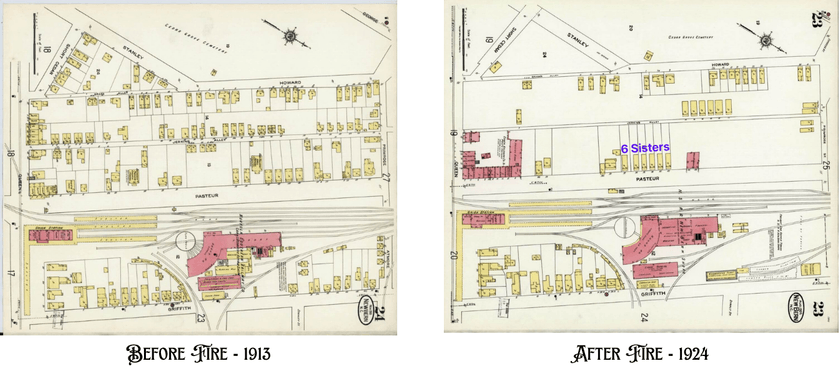
For decades, the 6 Sisters provided stable accommodations for working-class residents, many of whom were employed in nearby rail yards, lumber operations, domestic service, and other essential trades that powered the local economy. More than just housing, they became part of a close-knit neighborhood rooted in resilience and community.
Today, under the stewardship of the New Bern Preservation Foundation, the homes are being refreshed and transitioned into individually owned residences with preservation protections, honoring both their architectural significance and the rich cultural history of the people and neighborhood they represent.