
The New Bern Preservation Foundation grew out of community concern over the loss of historic buildings in New Bern during the mid-20th century. As older homes and commercial buildings were demolished, altered, or left to deteriorate, local preservation advocates recognized the need for an organization devoted to protecting the city’s historic places.
Why the Foundation Was Formed
From the 1950s through the early 1970s, many parts of New Bern’s historic downtown were in decline. Homes stood vacant, Middle Street façades were covered with corrugated metal, and buildings that had contributed to the city’s character for generations were disappearing.
The widening of Broad Street in the late 1950s resulted in the loss of numerous homes as the former tree-lined residential street was transformed into a major thoroughfare. During the same period, much of the historic Trent River waterfront district was demolished through urban renewal.
In 1951, the Federal and Greek Revival girlhood home of Sophia Moore Duffy on Middle Street was converted into apartments. Its Greek Revival porches were removed, and much of its original interior woodwork was lost. Changes such as these increased concern about what New Bern could lose without an organized preservation effort.
The restoration of Tryon Palace and the reactivation of the New Bern Historical Society brought renewed attention to local history, but neither could ensure the preservation of the surrounding historic community. A separate effort was needed to acquire threatened properties, protect them, and return them to responsible private ownership.
A Committee Was Formed
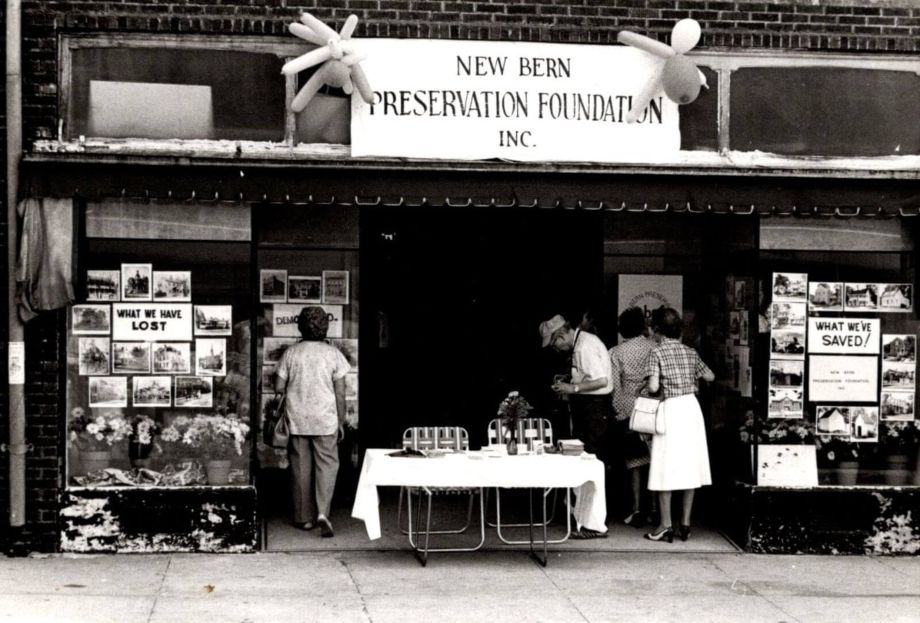
In 1972, the New Bern Historical Society formed a committee to stop the demolition of historic structures. In 1973 that committee, under the presidency of Dr. Francis King, called Historic New Bern Foundation, Inc. (HNBF) became the separately chartered New Bern Preservation Foundation (NBPF), which operated a revolving fund for endangered properties. Pop Beasley, with his expertise in real estate, also headed the organization in its formative years.
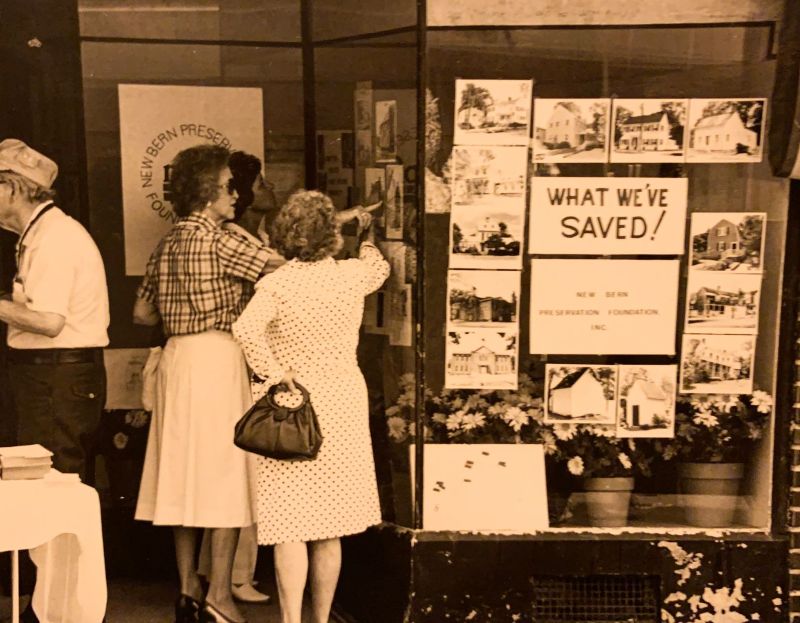
Beginning with the purchase of the Elijah Clark House in 1973, the Foundation eventually saved over 70 historic structures and in the process stabilized key residential areas, including those near Tryon Palace and the old New Bern Academy.
With a growing membership and a professional executive director since 1981, the Foundation provided technical assistance to property owners. It has also sponsored architectural inventories and National Register nominations including those for Riverside, DeGraffenried Park, and Ghent neighborhoods.
Most important for the future, with the cooperation of the local schools and the New Bern Historical Society, the New Bern Preservation Foundation provided lesson plans and materials that are used by fourth and eighth grade teachers to explain history through historic architecture.
Charles and Carolyn Peterson served as the Foundation’s co-coordinators. The Petersons followed coordinator Karen Rochon and Executive Directors Angela Barnett (1981-1985) and Barbara Howlett (1986-2005).
Why the New Bern Preservation Foundation Still Matters Today
Notable Preservation Projects
Union Station Depot
One of NBPF’s significant achievements includes the preservation of the Union Station Depot, a vital piece of New Bern’s transportation history.
King Solomon Lodge #1
In a remarkable effort, NBPF raised half a million dollars to restore King Solomon Lodge #1, the oldest African American Masonic lodge in North Carolina. This project not only preserved a significant building but also honored the cultural heritage of the African American community in New Bern.
By becoming a member of the New Bern Preservation Foundation or making a donation, you’ll support our continuing preservation efforts.