
Patrick Duff, a Scottish lawyer, fled to America in 1757 with his uncle’s housemaid—by then his wife—adopting her surname, Gordon. After a brief stay in Edenton, the couple moved to New Bern when it became the colonial capital.
By 1771, they had prospered enough to build this home. In a letter to Signer William Hooper, Patrick remarked that his law practice was suffering because he was busy building his house. Given his professional circle, which included Governor Tryon and architect John Hawks, it’s likely Hawks designed this residence.
Patrick enjoyed the home for only three years before his death. Mary lived until 1786, leaving behind a detailed will and estate that included the house, thirteen enslaved people, and personal property. The estate was intended for her son Patrick, if of age, or otherwise for relatives in Florida. But Patrick had been sent back to Scotland for schooling, and no one in New Bern knew his exact age.
That uncertainty led to a legal sage. The younger Patrick—later known as Duffy—completed his education and set out for India, leaving a will in favor of his uncle. He never arrived. Whether accident or foul play was never resolved, though suspicions lingered.
The resulting estate dispute stretched on for 32 years. In 1818, attorney William Gaston informed the Florida heirs they had won, only to report that no assets remained, citing incomplete records.
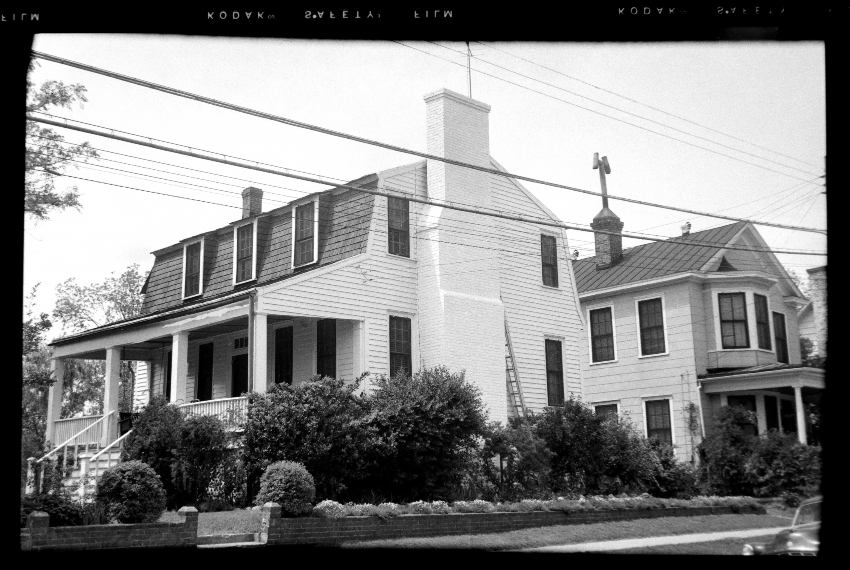
Architecturally, the house is equally compelling. In 1771, Hancock Street marked the edge of town, and the lot extended to the river. The home’s unusual placement reflects that earlier landscape.
A north-facing porch shelters the entrance, while a piazza added in 1786 once overlooked the water. Uncommon in New Bern, the house also features a full basement that originally housed the kitchen, laundry, and wine cellar.
When municipal water arrived in 1892, the large parcel was subdivided for additional housing: five homes in total, three of which survive today.
Today, the New Bern Preservation Foundation holds a preservation covenant on this home.
~ Written by Richard Parsons